
A1 English Level - Beginner
The A1 English level, often referred to as “Beginner,” is the first level in the Common European Framework of Reference for Languages (CEFR).
-
You can understand and use very basic everyday expressions
-
You can ask and answer simple questions
-
You can introduce yourself and give personal details (like where you live, people you know, and things you have)
Test your English level now
Answer 40 questions and find out your English language level comfortably.
A1 English Grammar Topics
What is CEFR?
What is A1 English Level - Beginner?
The A1 level in English, according to the Common European Framework of Reference for Languages (CEFR), represents the lowest beginner level of proficiency. At the A1 level, individuals typically have very limited or no knowledge of English. They may be able to understand and use familiar everyday expressions and basic phrases aimed at the satisfaction of concrete needs, such as introducing oneself, asking simple questions, and giving basic personal information.
Here are some key characteristics of the A1 English level:
- Basic vocabulary: Learners at this level have a limited vocabulary consisting of common words and phrases related to everyday topics like greetings, family, numbers, and basic activities.
- Simple sentences: They can produce simple sentences with basic grammatical structures, such as present tense verbs and simple noun phrases.
- Limited comprehension: They can understand simple spoken and written texts, especially if they are spoken slowly and clearly and use basic vocabulary.
- Basic communication: Learners at this level can engage in very basic communication tasks, such as introducing themselves, asking for simple information, and responding to simple questions.
Overall, the A1 level represents the starting point for individuals learning English as a second language, and it is foundational for developing higher levels of proficiency.
What can a1 english level do?
Individuals at the A1 English level have very limited proficiency in the language, but they can perform some basic communication tasks. Here are some examples of what someone at the A1 level might be able to do:
- Introduce themselves: They can introduce themselves using basic phrases such as “Hello, my name is…” and provide simple personal information like age, nationality, and occupation.
- Greetings and basic social interactions: They can greet others and respond to greetings using common phrases like “Good morning,” “Good afternoon,” and “How are you?”
- Ask and answer simple questions: They can ask and answer simple questions about personal details, such as where they are from, their likes and dislikes, and basic preferences.
- Make simple requests: They can make basic requests for information or assistance, such as asking for directions, ordering food or drinks, or requesting help in a store.
- Understand basic written and spoken language: They can understand simple written texts like short messages, signs, and notices, as well as simple spoken instructions and conversations on familiar topics.
- Engage in basic transactions: They can participate in simple transactions, such as buying tickets, making reservations, or exchanging basic information with others.
Overall, individuals at the A1 English level have limited language skills, but they can manage basic communication tasks in everyday situations with support and guidance.
What can a1 english level read?
At the A1 English level, individuals typically have very limited reading proficiency. They can understand simple and familiar written texts containing basic vocabulary and structures. Here are some examples of the types of reading materials that someone at the A1 level might be able to read:
- Short signs and labels: They can understand short signs, labels, and simple instructions found in everyday environments, such as street signs, product labels, and warning notices.
- Basic greetings and messages: They can read simple greetings, messages, and short notes, such as birthday cards, postcards, and simple emails or text messages.
- Very simple stories: They can read very short and basic stories designed for beginners, typically with repetitive language and simple vocabulary, such as children’s picture books or easy-reader stories.
- Simple lists and forms: They can understand simple lists, forms, and tables containing basic information, such as grocery lists, simple schedules, and basic personal information forms.
- Basic advertisements and announcements: They can understand basic advertisements, announcements, and public notices with simple language and familiar topics, such as job postings, event flyers, and community notices.
Overall, individuals at the A1 English level have limited reading skills and can understand only very simple written texts with familiar vocabulary and structures. They may need support and guidance to comprehend more complex or unfamiliar materials.
A1 English Level (Beginner) Speaking Skills
At the A1 English level, individuals have very limited proficiency in the language, but they can engage in basic spoken communication. Here are some ways someone at the A1 level might be able to talk:
- Introducing themselves: They can introduce themselves using simple phrases such as “Hello, my name is…” or “Hi, I’m…”
- Greetings and farewells: They can greet others and respond to greetings using common phrases like “Good morning,” “Good afternoon,” “Good evening,” and “Goodbye.”
- Asking and answering basic questions: They can ask and answer simple questions about personal details, such as where they are from, their age, and their occupation.
- Expressing basic needs and preferences: They can express basic needs and preferences using simple phrases, such as “I would like…” or “I prefer…”
- Making simple requests: They can make simple requests for information or assistance, such as asking for directions, ordering food or drinks, or requesting help in a store.
- Giving simple instructions: They can give simple instructions or directions using basic vocabulary and simple sentence structures.
- Describing basic objects and actions: They can describe basic objects, people, and actions using simple adjectives and verbs.
Overall, individuals at the A1 English level can engage in very basic spoken communication, but their proficiency is limited to simple phrases, vocabulary, and structures. They may need support and guidance to communicate effectively in more complex or unfamiliar situations.
How can I develop A1 English level language skills?
Individuals at the A1 English level can take steps to develop their language skills and progress to higher proficiency levels. Here are some tips for how someone at the A1 level can improve their English:
- Take English classes: Enroll in English language classes specifically designed for beginners. These classes will provide structured lessons and opportunities to practice speaking, listening, reading, and writing in English.
- Practice regularly: Set aside time each day to practice English. Practice speaking with friends, family members, or language partners who are fluent in English. Use English-language learning apps, websites, and resources to practice reading, listening, and vocabulary.
- Learn basic vocabulary: Focus on building a foundation of basic vocabulary words and phrases related to everyday topics such as greetings, numbers, colors, food, clothing, family, and activities.
- Listen to English: Listen to English-language audio materials such as podcasts, radio programs, songs, and audiobooks. Focus on listening for key words and phrases and try to understand their meanings in context.
- Read simple texts: Start reading simple texts in English, such as children’s books, easy-reader stories, or graded readers designed for beginners. Focus on understanding the main ideas and key information.
- Practice speaking: Practice speaking English as much as possible, even if it’s just practicing simple greetings or conversations with yourself. Record yourself speaking and listen to your pronunciation and intonation.
- Use language-learning apps: Utilize language-learning apps and websites that offer interactive exercises, quizzes, and games to practice English vocabulary, grammar, and pronunciation.
- Seek feedback: Ask for feedback from teachers, language partners, or native speakers to help identify areas for improvement and track your progress over time.
- Be patient and persistent: Learning a new language takes time and effort, so be patient with yourself and stay motivated. Set achievable goals and celebrate your progress along the way.
By incorporating these strategies into their language-learning routine, individuals at the A1 English level can gradually improve their skills and work towards achieving higher proficiency levels in English.
Test your English level now
Answer 40 questions and find out your English language level comfortably.
What are A1 English Level Daily Idioms?
At the A1 English level, individuals may encounter some basic idiomatic expressions in everyday conversations. Here are a few examples of simple idioms that someone at the A1 level might come across:
- Piece of cake: Used to describe something that is very easy to do. Example: “Don’t worry, learning to ride a bike is a piece of cake!”
- Break a leg: A way to wish someone good luck, especially before a performance or important event. Example: “You’re going to do great on your presentation today! Break a leg!”
- Cost an arm and a leg: Used to describe something that is very expensive. Example: “I wanted to buy that new phone, but it costs an arm and a leg.”
- Hit the hay: Means to go to bed or go to sleep. Example: “I’m feeling tired, so I think I’ll hit the hay early tonight.”
- Bite the bullet: Means to face a difficult or unpleasant situation with courage and determination. Example: “I know the exam will be tough, but we just have to bite the bullet and do our best.”
- Under the weather: Means to feel unwell or sick. Example: “I can’t come to work today because I’m feeling a bit under the weather.”
- Spill the beans: Means to reveal a secret or share confidential information. Example: “I can’t believe you spilled the beans about the surprise party!”
These idiomatic expressions are commonly used in casual conversations and can add color and nuance to everyday language. However, it’s important to note that idioms can vary widely depending on cultural context and regional dialects, so learners should continue to expand their vocabulary and understanding as they progress in their English language studies.
How many words should you know for A1 Level English?
At the A1 English level, learners typically have a very basic vocabulary consisting of common words and phrases used in everyday situations. While there isn’t a specific number of words that learners need to know to reach the A1 level, they should be familiar with a range of basic vocabulary words and phrases to effectively communicate at this proficiency level.
Estimates suggest that individuals at the A1 level should know around 300 to 500 commonly used words and phrases. These words cover essential topics such as greetings, numbers, colors, family members, food and drink, daily activities, and basic emotions. Additionally, learners should be familiar with basic grammar structures and sentence patterns to form simple sentences and engage in basic conversations.
To build their vocabulary, learners can focus on learning high-frequency words and phrases used in everyday communication. They can use flashcards, vocabulary lists, language-learning apps, and other resources to practice and reinforce their knowledge of these words.
As learners progress in their language studies and move beyond the A1 level, they will continue to expand their vocabulary and linguistic proficiency, gradually acquiring more words and expressions to communicate in a variety of contexts and situations.
Learn more about A1 English vocabulary: https://globalenglishtest.com/a1-english-vocabulary/
Three English Test Qestions that A1 English Level can answer :
- a) Blue
- b) Red
- c) Green
- d) Yellow
- a) Goodbye
- b) Hi
- c) Thank you
- d) Bye
-
- a) Good morning
- b) Thank you
- c) Bless you
- d) Goodbye
Test your English level now
Answer 40 questions and find out your English language level comfortably.

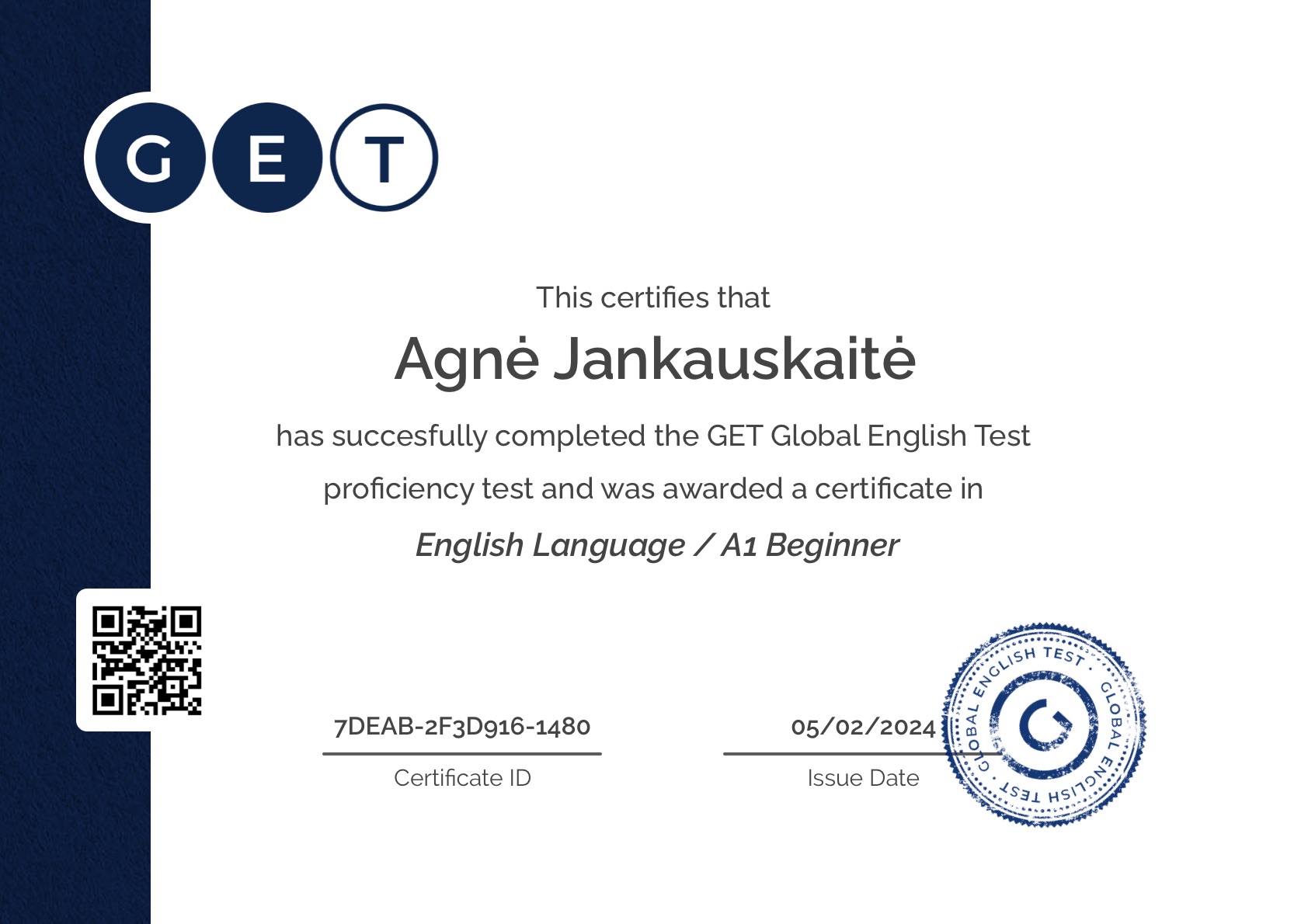
Test your English level and get your certificate!
GET it now