
Understanding the vocabulary associated with food and drinks is essential for anyone learning English. Whether you are planning to travel, study, or work in an English-speaking country, having a good grasp of these terms can enhance your communication skills significantly.
What's your English level?
Take the test and get your certificate!

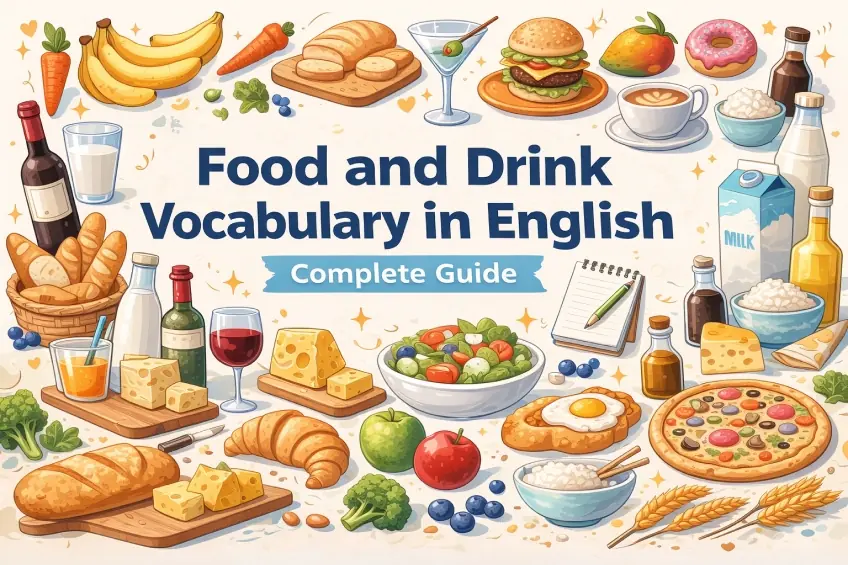
Common Food Vocabulary
The English language is rich with words to describe various types of foods. Here are some essential categories:
| Category | Examples |
|---|---|
| Fruits | Apple, Banana, Orange, Mango |
| Vegetables | Broccoli, Carrot, Spinach, Tomato |
| Meats | Chicken, Beef, Pork, Lamb |
| Dairy | Milk, Cheese, Yogurt, Butter |
| Grains | Bread, Rice, Pasta, Cereal |
| Seafood | Salmon, Tuna, Shrimp, Cod |
| Nuts | Almond, Walnut, Cashew, Pistachio |
| Legumes | Lentils, Chickpeas, Beans, Peas |
| Herbs | Basil, Parsley, Thyme, Rosemary |
| Spices | Cinnamon, Pepper, Turmeric, Cumin |
| Beverages | Water, Tea, Coffee, Juice |
| Desserts | Cake, Ice Cream, Pudding, Pie |
| Snacks | Chips, Popcorn, Crackers, Pretzels |
| Breakfast Foods | Eggs, Pancakes, Oatmeal, Toast |
| Fast Food | Burger, Pizza, Hot Dog, Fries |
| Street Food | Kebab, Taco, Falafel, Shawarma |
| Baked Goods | Croissant, Muffin, Bagel, Donut |
| Condiments | Ketchup, Mustard, Mayonnaise, Relish |
| Sauces | Tomato Sauce, Soy Sauce, BBQ Sauce, Pesto |
| Oils | Olive Oil, Sunflower Oil, Coconut Oil, Canola Oil |
| Soups | Tomato Soup, Chicken Soup, Lentil Soup, Miso |
| Salads | Caesar, Greek, Garden, Coleslaw |
| Cheese Types | Cheddar, Mozzarella, Brie, Feta |
| Milk Alternatives | Soy Milk, Almond Milk, Oat Milk, Rice Milk |
| Frozen Foods | Frozen Pizza, Ice Cream, Frozen Vegetables, Nuggets |
| Canned Foods | Tuna Can, Baked Beans, Corn, Soup |
| Pickled Foods | Pickles, Olives, Kimchi, Sauerkraut |
| Rice Dishes | Pilaf, Risotto, Fried Rice, Paella |
| Pasta Types | Spaghetti, Penne, Fusilli, Lasagna |
| Bread Types | Baguette, Sourdough, Rye Bread, Pita |
| World Cuisines | Italian, Mexican, Chinese, Indian |
| Sweets | Chocolate, Candy, Caramel, Fudge |
| Chocolate Types | Dark Chocolate, Milk Chocolate, White Chocolate, Cocoa |
| Cakes | Cheesecake, Chocolate Cake, Sponge Cake, Carrot Cake |
| Ice Cream Flavors | Vanilla, Chocolate, Strawberry, Pistachio |
| Coffee Types | Espresso, Latte, Cappuccino, Americano |
| Tea Types | Green Tea, Black Tea, Herbal Tea, Oolong |
| Smoothies | Berry Smoothie, Banana Smoothie, Green Smoothie, Protein Smoothie |
| Breakfast Cereals | Cornflakes, Granola, Muesli, Bran |
| Street Drinks | Lemonade, Iced Tea, Milkshake, Ayran |
| Mediterranean Foods | Hummus, Tzatziki, Dolma, Ratatouille |
| Asian Foods | Sushi, Ramen, Dumplings, Curry |
| Middle Eastern Foods | Hummus, Baba Ghanoush, Kebabs, Manakish |
| Vegan Foods | Tofu, Tempeh, Seitan, Veggie Burger |
| Gluten-Free Foods | Quinoa, Buckwheat, Rice Cakes, Cornbread |
| Protein Sources | Eggs, Fish, Beans, Tofu |
| Comfort Foods | Mac and Cheese, Mashed Potatoes, Meatloaf, Stew |
What's your English level?
Take the test and get your certificate!
Common Drinks Vocabulary
Similarly, the vocabulary for drinks is quite diverse. Here are some common terms:
- Water
- Coffee
- Tea
- Juice
- Soda
- Wine
To better understand these terms, you might consider referring to reputed English language learning resources like the Cambridge Dictionary or the Merriam-Webster.
English Phrases for Eating and Drinking
When in a restaurant or a café, knowing the right phrases can make your experience much more enjoyable:
- “I would like to order…”
- “Can I have the menu, please?”
- “Do you have any recommendations?”
- “I’m allergic to…”
- “Could we have the bill, please?”
| Phrase | Used For |
|---|---|
| I would like to order… | Used to start placing an order politely. |
| Can I have the menu, please? | Used to ask for the menu in a restaurant or café. |
| Do you have any recommendations? | Used to ask the staff for food or drink suggestions. |
| What do you suggest? | Used to get a personal recommendation from the server. |
| What’s today’s special? | Used to ask about special dishes available that day. |
| Is this dish spicy? | Used to check whether a dish is spicy or hot. |
| Does this contain nuts / dairy / gluten? | Used to ask about ingredients due to allergies or preferences. |
| I’m allergic to… | Used to inform the staff about a food allergy. |
| Could I have this without onions? | Used to request a modification to a dish. |
| Can I get this well done / medium / rare? | Used to specify how meat should be cooked. |
| Can we get some water, please? | Used to ask for water at the table. |
| Still or sparkling? | Used to clarify the type of water being served. |
| I’ll have the same, please. | Used to order the same item as someone else. |
| Can we order one more? | Used to request an additional item. |
| Could we get another round of drinks? | Used to order more drinks for the table. |
| Everything was delicious, thank you. | Used to compliment the food after eating. |
| This tastes great. | Used to express that the food is very good. |
| Excuse me, could you help us? | Used to politely get the server’s attention. |
| We’re ready to order. | Used to tell the staff you are ready to place an order. |
| Could we have the bill, please? | Used to ask for the check after finishing the meal. |
| Can we pay by card? | Used to ask if card payment is accepted. |
| Is service included? | Used to check if the service charge is already added. |
| Keep the change, please. | Used to tell the server they can keep the change as a tip. |
Cultural Aspects of Food and Drinks
Food and drinks are deeply woven into the cultural fabric of any society. In English-speaking countries like the UK and the USA, you might find that certain foods are associated with particular times of the day. For example, eggs and bacon are typical breakfast items, while a sandwich with chips might be a common lunch. The British Council provides more insights into cultural nuances related to meals.
Learning English with Food-Related Idioms
Idioms are a fun way to embellish your English vocabulary:
- “Bring home the bacon” – Means to earn a living or be successful financially.
- “Couch potato” – Refers to someone who is very inactive and watches a lot of TV.
- “Piece of cake” – Used to describe a task that is very easy to do.
These expressions can make conversations more engaging and colorful.
Testing Your English Vocabulary
You can check your English level using the GET Global English Test, which offers a comprehensive evaluation of your language skills.
Importance of Food and Drinks Vocabulary
Having a strong vocabulary related to food and drinks is crucial for various aspects of life. Not only does it aid in basic communication, but it also plays a significant role in cultural understanding and social interactions.
Proficiency in food and drinks vocabulary can make a difference in everyday situations. Whether you are ordering a meal at a restaurant, grocery shopping, or discussing culinary preferences, knowing the right terms enhances your ability to express yourself clearly and accurately.
Enhancing Language Skills through Food
Studying food and drinks vocabulary can be an enjoyable way to improve your language skills. By exploring different food categories, ingredients, and cooking methods in English, you not only expand your vocabulary but also deepen your understanding of diverse culinary cultures.
Interactive Language Learning with Food
Engaging in food-related activities can provide interactive language learning opportunities. Cooking or baking recipes in English, attending food-themed events, or joining culinary classes can immerse you in language-rich environments, promoting language acquisition in a practical and enjoyable manner.
Culinary Vocabulary Expansion
Continuously expanding your culinary vocabulary allows you to appreciate a wider range of foods and beverages from various cultures. Exploring new taste sensations and understanding the culinary heritage behind different dishes enriches your cultural competence and broadens your gastronomic horizons.
What's your English level?
Take the test and get your certificate!




