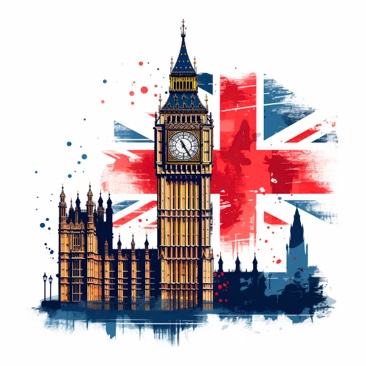
London’s landmarks tell different stories: royal power, scientific discovery, public life, art and the growth of the city. These fifteen places offer a useful introduction without requiring you to visit everything on one trip. Each entry explains what makes the place distinctive and suggests something to notice or discuss in English.
What's your English level?
Take the test and get your certificate!

Fifteen landmarks to choose from
1. Tower of London
Tower of London is a royal fortress beside the Thames, associated with the Crown Jewels, imprisonment and changing uses over centuries. Distinguish the whole Tower complex from the White Tower within it. In a guide’s explanation, listen for how a building’s purpose changed.
2. Tower Bridge
Tower Bridge: the bridge with two prominent towers and a lifting central roadway is a separate attraction from the Tower of London. It is also different from London Bridge. Practise describing its parts with words such as tower, walkway, river and engine.
3. Westminster Abbey
Westminster Abbey is a church closely connected with coronations, royal history and memorials to public figures. It remains a place of worship. Separate sightseeing arrangements from services and check the visitor information before planning an interior visit.
4. Palace of Westminster and Big Ben
Palace of Westminster and Big Ben: the Palace of Westminster houses the UK Parliament; Big Ben is the name of the great bell in the Elizabeth Tower. People often use Big Ben informally for the clock or tower. Practise explaining the precise distinction in two sentences.
5. Buckingham Palace
Buckingham Palace is a royal palace associated with state occasions and official royal life. Viewing the exterior is different from entering visitor areas. Check the exact dates and ticket arrangements for the part you want to see.
6. St Paul’s Cathedral
St Paul’s Cathedral: the cathedral’s dome is a major feature of London’s skyline. The present building is associated with architect Christopher Wren. Compare the words dome, spire and tower. Check access arrangements if you plan to visit elevated areas as well as the main interior.
7. British Museum
British Museum is a museum whose collections cover human history and cultures from many parts of the world. Choose one gallery or theme instead of trying to see everything. Read an object label and separate the object’s date, material and place of origin.
8. Trafalgar Square and the National Gallery
Trafalgar Square and the National Gallery: the square and the art museum on its northern side combine a public city space with a major painting collection. Use the square to practise directions, then choose one painting to describe. Distinguish what you can see from your interpretation of it.
9. London Eye
London Eye is an observation wheel on the South Bank offering elevated views across the city. The experience is a moving viewpoint rather than a museum visit. Use near, beyond, opposite and in the distance to describe visible landmarks.
10. The Shard
The Shard is a tall modern building near London Bridge, with a dedicated visitor viewing attraction. The public viewing experience is separate from other businesses in the building. Check the attraction’s current access and visibility information.
11. Tate Modern
Tate Modern is a modern and contemporary art museum in the former Bankside Power Station. Look at how an industrial building has been reused. Compare a description of the exterior with your response to an artwork inside.
12. Shakespeare’s Globe
Shakespeare’s Globe is a modern theatre associated with the reconstruction of the Globe and the performance of Shakespeare’s plays. It is not the surviving original Elizabethan theatre. A performance and a guided visit provide different experiences, so choose the appropriate booking.
13. Royal Observatory Greenwich
Royal Observatory Greenwich is a site connected with astronomy, timekeeping and the historic Prime Meridian. Read the displays as an explanation of how people measured time and position. Practise the distinction between an observation, a measurement and a prediction.
14. Natural History Museum
Natural History Museum is a museum in South Kensington with collections and displays concerning the natural world. Choose a theme such as fossils, minerals or biodiversity. Write one sentence identifying an object and another explaining what it helps scientists investigate.
15. Kensington Palace
Kensington Palace is a royal residence with visitor displays exploring aspects of royal lives and history. Check which visitor areas and exhibitions are open. Avoid assuming that all parts of a working royal residence can be entered.
Plan a route around an area
The Tower of London and Tower Bridge can be considered together because they are neighbours. Westminster Abbey and the Palace of Westminster form another natural pairing. On the south side of the river, the Globe and Tate Modern are close enough to compare as two very different cultural spaces.
Greenwich deserves its own planning rather than being treated as a quick stop between central attractions. Museums can also absorb much more time than an exterior photograph. Choose a small number of priorities and use current transport information to connect them.
Useful visitor language
| Phrase | When to use it |
|---|---|
| Does this ticket include the exhibition? | Checking what you can enter. |
| Is there a step-free route? | Asking about a route without steps. |
| Where does the guided tour begin? | Finding a meeting point. |
| Are photographs allowed here? | Checking the rules in a particular room. |
| Could you explain what this building was used for? | Asking about a site’s history. |
Check the official page before travelling
The links above lead to the attraction or its responsible organisation. Check opening dates, reservations, accessibility information and any temporary closures for the day you intend to visit. Religious buildings, working institutions and special exhibitions may have arrangements that differ from general sightseeing access.
After a visit, write a short description using three parts: what the place is, one detail you noticed and why it interested you. For example, “The building used to have an industrial purpose. Today it contains art, and the large interior changes how the displays feel.” This turns a sightseeing experience into a manageable English writing task.